




What is Lactoferrin? Discover Vivitein™ LF for Your Next Innovation
For decades, lactoferrin has been studied for its role in human biology. Only recently has it become accessible for broader product innovation.
Naturally present in milk and part of the body’s innate defense system, lactoferrin is a bioactive protein known for its ability to bind iron, help shape the balance of gut microbial populations, reinforce the gut barrier lining, and calm inflammation as part of modulating the body's immune responses. These functions underpin its potential across areas such as iron regulation, gut health, immune support, and active nutrition, categories where demand for targeted, evidence-based ingredients continues to grow.
Despite this strong scientific foundation, lactoferrin has remained a niche ingredient. Limited availability, high cost, and reliance on dairy extraction have historically restricted its use to specialized applications such as infant nutrition.
That constraint is now changing. Advances in precision fermentation are enabling the production of lactoferrin at scale, with consistent quality and price, and without dependence on traditional dairy supply chains. This shifts lactoferrin from a constrained bioactive to a viable ingredient for broader formulation.
With Vivitein™ LF, Vivici introduces its precision fermentation-derived lactoferrin ingredient, available at scale for health and wellness brands for the first time.
So, what is Lactoferrin?
Lactoferrin is one of the most valuable bioactive components found in dairy. Naturally present in milk at very low levels, around 0.1 g/L in bovine milk, it takes roughly 10,000 liters of milk to produce just 1 kg of lactoferrin. On top of that, extensive purification is required to obtain it in a pure form. It’s no surprise that lactoferrin is often referred to as “pink gold.”
In the human body, lactoferrin is more than a milk protein. It is a naturally occurring, iron-binding glycoprotein that forms part of our innate defense and nutrient-regulation systems, found in human milk and other secretions (e.g. saliva, tears, gastrointestinal fluids) and released at sites of infection and inflammation, where it helps regulate iron uptake and transport and modulate the immune response (Kruzel et al., 2017; Liu et al., 2021).
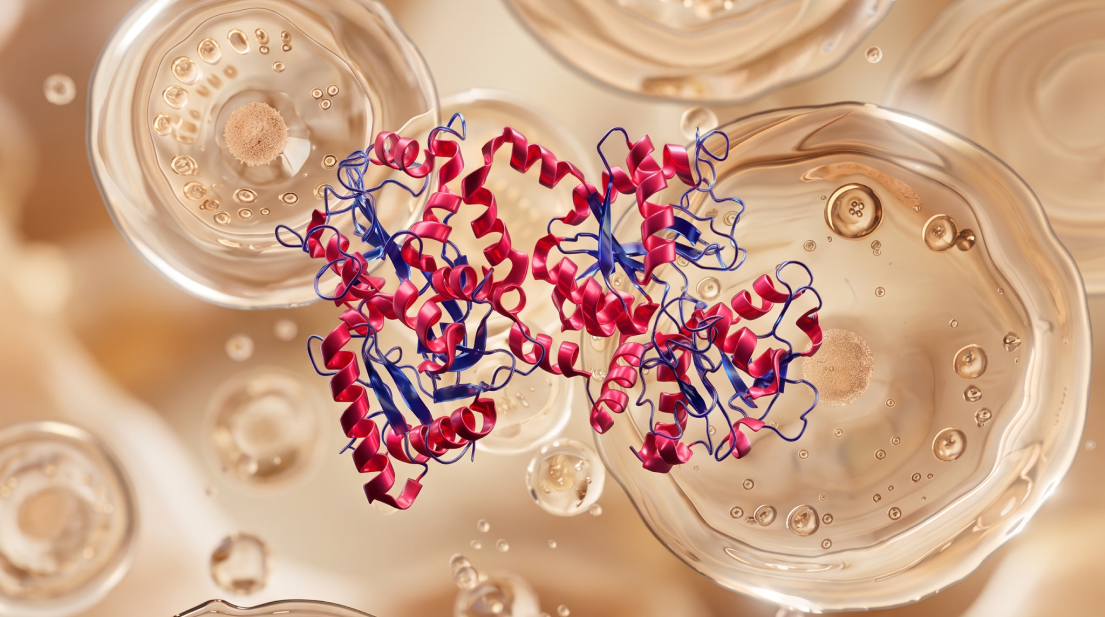
At the molecular level, lactoferrin is a relatively large protein (~80 kDa), made up of around 700 amino acids. Its structure is uniquely designed, with two globular domains – the N- and C-lobes – each capable of binding one iron ion. This strong affinity for iron is rare among dairy proteins and sits at the heart of some of lactoferrin’s functional benefits. Depending on how much iron is bound, lactoferrin exists in different forms: apo-lactoferrin (iron-depleted) and holo-lactoferrin (iron-saturated). Interestingly, iron binding also gives lactoferrin its characteristic pink color.
Beyond iron binding, lactoferrin also carries carbohydrate groups on its surface (glycosylation) that naturally vary in composition and structure depending on the source and production method. In addition, its N-terminus carries a strong positive charge, allowing it to interact with negatively charged molecules such as lipopolysaccharides (LPS) on bacterial membranes. This interaction helps to neutralize pro-inflammatory effects (Kruzel et al., 2017).
Together, these structural features make lactoferrin a remarkably versatile molecule – one that continues to attract attention for its wide range of biofunctional benefits, spanning iron regulation, gut health, immune support, and active nutrition.
The Benefits of Lactoferrin for Health and Wellness Brands
Lactoferrin's appeal to brands lies in the breadth of its biology. Rather than acting on a single pathway, it works across several of the body's own systems at once – helping to regulate iron, shape the gut microbiome and reinforce the gut barrier, and dampen the low-grade inflammation that undermines both. Because it supports the body's own systems rather than overriding them, lactoferrin can be formulated for efficacy and tolerability at the same time.
That same breadth, however, has historically been part of lactoferrin's challenge. When an ingredient can do many things, it's tempting to say all of them at once – and products that promise a long, unfocused list of benefits tend to create confusing propositions that don't map to any one consumer need. The opportunity is to do the opposite: to translate lactoferrin's multifunctionality into clear, single-minded propositions, each built around a specific consumer problem.
This multifunctionality directly relates to three of the fastest-growing consumer opportunities in health and wellness: sustained vitality and gentle iron support, gut health and microbiome balance, and endurance performance. In each, demand is shifting away from single-note, generic solutions – whether that's conventional iron salts, simple probiotics, or basic recovery formulas – toward targeted, science-led ingredients, and lactoferrin offers brands a credible, evidence-backed route to differentiation. The sections below set out the science behind each opportunity and how Vivitein™ LF translates it into finished products.
Sustained Vitality: Gentle and effective iron utilisation for women
Fatigue is so prevalent in modern society that it’s taken as a given. But what if millions of fatigue sufferers could experience sustained vitality instead?
More than 1 in 4 women aged between 15 and 50 experience fatigue at any given time, making it one of the most prevalent health conditions on the planet (World Health Organization, 2025). Iron deficiency is a leading driver, and women of reproductive age are among the groups most affected (Zhao et al., 2022).
Many of those women are low in iron, causing exhaustion, brain fog, muscle weakness, and dizziness. These symptoms can become even more severe during periods, when blood and iron loss are greatest.
A major and often overlooked driver is inflammation. Even when enough dietary iron is consumed, low-grade inflammation can interfere with how iron is absorbed and mobilized around the body, meaning the iron is there, but the body can't use it effectively. In these cases, simply adding more iron through supplementation is often ineffective, because it doesn't address the underlying inflammatory barrier to iron regulation.
Compounding this, the iron supplements meant to help are not always effective and can cause digestive discomfort almost as debilitating as the fatigue they're meant to manage. Conventional ferrous salts, in particular, frequently lead to gastrointestinal side effects such as nausea and epigastric discomfort, with up to 30% of users experiencing dose-limiting symptoms (Zhao et al., 2022; Abu Hashim et al., 2017).
Lactoferrin is the opportunity to solve both issues. It binds tightly to iron in the gut and delivers it through intestinal receptors to where it is needed, gently and effectively supporting iron utilisation (Lönnerdal et al., 2011). At the same time, by keeping iron bound, it limits the free iron that triggers oxidative stress and local inflammation – the source of much GI discomfort - so that the iron does not remain “locked” in the intestinal cells but is actually further transported into the body. Clinical evidence supports this dual benefit: across randomized trials, oral lactoferrin improved iron status markers such as serum iron, ferritin, and hemoglobin while causing fewer gastrointestinal side effects than ferrous sulfate (Zhao et al., 2022; Abu Hashim et al., 2017).
Vivici's breakthrough protein, Vivitein™ LF, gently and effectively mobilises iron from the gut to where it's needed in the body, and supports a healthier intestinal and inflammatory environment, so that both dietary iron and iron supplements can be utilised more effectively by the body. This means iron can deliver its benefit without the discomfort that causes problems for many.
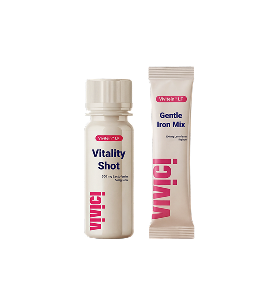
Whether taken on its own, in a women’s-focused ready-to-mix, or added to iron supplements, Vivitein™ LF can enable those who suffer from fatigue – including millions of women with low iron levels – to enjoy sustained energy and vitality.
Gut Health: Supports a thriving microbiome and a strong, healthy gut barrier
No matter where you turn, everyone is talking about gut health. It’s a topic that’s only going to become more important in the coming years, with growing consumer awareness of its foundational role in health, particularly mental and immune health, and equally the impact modern diets and lifestyles can have on our microbiome and broader gut health.
Lactoferrin acts on gut health through several complementary mechanisms. First, it helps balance the microbiome. By binding iron in the gut, it limits the supply of this essential nutrient to certain undesirable, iron-dependent bacteria, slowing their growth, while the growth of better-adapted beneficial strains such as Bifidobacterium and Lactobacillus species is preserved or promoted (Griffiths et al., 2003; Vega-Bautista et al., 2019; Chen et al., 2017). Unlike probiotics, which simply add more bacteria (with varying degrees of survival and success), lactoferrin helps improve the overall balance of the existing gut ecosystem.
Second, lactoferrin supports the gut barrier itself. The gut barrier is the single-cell lining that acts as a gatekeeper between what's inside the gut and the rest of the body – letting nutrients and water pass into the bloodstream while keeping bacteria, toxins, and other harmful material out. Lactoferrin promotes the growth and renewal of the intestinal epithelial cells that make up this lining (Reznikov et al., 2014; Lönnerdal et al., 2011). When the gut is challenged – for instance by exposure to bacterial components such as LPS – lactoferrin can help reduce intestinal permeability, supporting a more robust and less “leaky” gut lining (Liu et al., 2019; Liu et al., 2021). This strengthening of the barrier is critical, because it limits the inflammation that drives long-term gut dysfunction.
Third, lactoferrin addresses a less obvious but important source of stress in the gut: free iron. While essential, free iron is highly reactive and can drive the formation of harmful reactive oxygen species (ROS) that damage cells. By tightly binding iron, lactoferrin keeps it in a less reactive form, reducing oxidative stress and helping protect intestinal cells (Liu et al., 2019; Kruzel et al., 2017). In parallel, lactoferrin helps dampen pro-inflammatory signaling in the gut, contributing to a calmer intestinal environment (Liu et al., 2021; Kruzel et al., 2017).
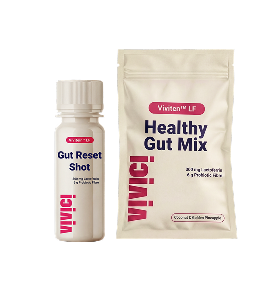
As a key ingredient in probiotic, synbiotic, and gut barrier repair formulations, Vivitein™ LF brings these mechanisms together. This also makes it a genuine point of difference in a crowded gut health category, where most brands are playing in the same space – probiotics and fibre – and struggling to stand out. Because lactoferrin works differently, balancing the existing microbiome and reinforcing the barrier rather than simply adding more bacteria, it gives brands a distinct, science-led story to tell. By supporting a balanced microbiome, a stronger barrier, and a less inflamed gut environment, it allows health and wellness brands to offer consumers premium gut health products that both differentiate on shelf and work in greater harmony with the body's own systems.
Endurance Performance: Fights the inflammation that inhibits performance
As any serious athlete or coach can tell you, it’s not just about how hard you train, but how well your body can sustain the demands placed on it.
This applies not only to endurance athletes who push their limits over long durations, but also to recreational athletes who enjoy long training sessions, where underlying physiology shapes energy levels and consistency.
Anemia is commonly observed in athletes – often called “sports anemia” – driven by factors such as repetitive-impact hemolysis, iron loss through sweat, urine and stool, and, in female athletes, menstrual losses (Koikawa et al., 2008). In parallel, prolonged endurance exercise can compromise gut barrier integrity, contributing to gastrointestinal distress, inflammation, and greater susceptibility to illness. That’s why iron balance and gut health are becoming ever more important to endurance athletes, and a deciding factor when making nutrition and supplement purchases.
The key to addressing both is lactoferrin, which targets a critical barrier to performance that other supplements often miss: inflammation. By reducing the low-grade inflammation that follows long training sessions, lactoferrin works on two fronts that matter directly to athletes.
First, it helps improve iron availability. Lactoferrin supports iron status through receptor-mediated uptake and by modulating the inflammation that influences hepcidin – the signal that governs how much iron the body can access – helping to raise markers such as haemoglobin and serum iron (Koikawa et al., 2008; Zhao et al., 2022; World Health Organization, 2025). Better iron availability means better oxygen transport, energy, and the capacity to train and recover consistently.
Second, it helps protect the gut barrier. Prolonged, intense exercise increases intestinal permeability – often experienced as "runner's gut" – which contributes to gastrointestinal distress, inflammation, and greater susceptibility to illness. By reducing epithelial permeability when intestinal cells are challenged, lactoferrin helps keep the barrier intact, limiting the passage of harmful compounds and the GI discomfort that can derail long training sessions (Liu et al., 2019; Liu et al., 2021; World Health Organization, 2025).
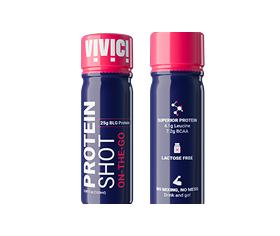
Vivitein™ LF brings these benefits into a single ingredient, unlocking advantages not provided by the protein, creatine, and fibre solutions that currently dominate the category. As a result, endurance athletes of all levels can sustain their energy, performance and stay healthy; keeping them at the top of their game.
Why Lactoferrin has Been Hard to Scale Commercially Until Now
Traditionally, lactoferrin is extracted from bovine milk, where it exists in very low concentrations – around 0.1 g/L, meaning it takes roughly 10,000 liters of milk to yield just 1 kg (World Health Organization, 2025). Its extraction then requires multi-step purification designed to preserve structural integrity and biological functionality, including sophisticated filtration and chromatographic techniques. These processes are technically complex, resource-intensive, and highly sensitive to upstream variability in raw milk supply, which can influence yield, purity, and consistency.
While demand for bioactive proteins has grown steadily across clinical and consumer nutrition segments, supply-side limitations for ingredients such as lactoferrin have constrained broader adoption and integration into mainstream product platforms.
As a result, brands have faced:
• Limited and fluctuating availability
• Elevated and volatile procurement and production costs
• Batch-to-batch consistency challenges
• Reduced flexibility when formulating at commercial scale
These constraints have confined lactoferrin primarily to high-margin segments such as infant nutrition and specialized medical formulations, where premium pricing can absorb production costs. Consequently, although the potential of lactoferrin has long been recognized, this potential has remained underrealized in broader wellness and performance categories.
Only by addressing these systemic production challenges can lactoferrin move from a scarcity-bound bioactive to a scalable driver of innovation in functional nutrition.
Precision Fermentation Unlocks a New Era
Vivitein™ LF transforms vast potential into commercial reality. Precision fermentation represents a transformative platform for producing high-value proteins with consistency and scalability. Lactoferrin produced by precision fermentation is bio-equivalent to milk-derived lactoferrin.
By enabling targeted protein production through controlled microbial systems, precision fermentation offers:
• Reliable, scalable manufacturing
• Consistent ingredient quality
• Reduced supply and pricing volatility
• Alignment with modern sustainability goals
For lactoferrin, this production model removes historical bottlenecks and enables broader innovation and commercial deployment. Rather than being limited by the constraints of traditional extraction methods, health and wellness brands can now operate in a new paradigm, where bioactive dairy proteins are purposefully produced to meet global demand.
Introducing Vivitein™ LF: The Breakthrough Protein Whose Time has Come
Vivici makes lactoferrin more accessible than ever before, with its breakthrough ingredient Vivitein™ LF.
Produced through precision fermentation, Vivitein™ LF overcomes the historical supply and cost constraints associated with traditionally produced lactoferrin. The result is a pure and potent lactoferrin product – a high-purity (>90% protein) bioactive whey protein – that is available at scale for health and wellness brands (World Health Organization, 2025).
For the first time, brands can confidently integrate lactoferrin into mainstream vitality, gut health, and endurance performance platforms – without the volatility and scarcity that once defined “pink gold.”
Vivitein™ LF transforms lactoferrin from a niche specialty ingredient into a scalable, science-led ingredient for functional health and wellness innovation. The time for lactoferrin has come.
Vivitein™ LF is part of Vivici's growing Vivitein™ portfolio of functional protein ingredients, which also includes Vivitein™ BLG – together making superior, science-led dairy proteins available at scale for health and wellness brands.
Want more information?
References
Abu Hashim, H. A., Foda, O., & Ghayaty, E. (2017). Lactoferrin or ferrous salts for iron deficiency anemia in pregnancy: A meta-analysis of randomized trials. European Journal of Obstetrics & Gynecology and Reproductive Biology, 219, 45–52. https://doi.org/10.1016/j.ejogrb.2017.10.003
Chen, P.-W., Liu, Z.-S., Kuo, T.-C., Hsieh, M.-C., & Li, Z.-W. (2017). Prebiotic effects of bovine lactoferrin on specific probiotic bacteria. BioMetals, 30(2), 237–248. https://doi.org/10.1007/s10534-017-9999-8
Griffiths, E. A., Duffy, L. C., Schanbacher, F. L., Qiao, H., Dryja, D., Leavens, A., Rossman, J., Rich, G., Dirienzo, D., & Ogra, P. (2003). In vitro growth response of Bifidobacteria and enteropathogens to bovine and human lactoferrin. Digestive Diseases and Sciences, 48(7), 1324–1332. https://doi.org/10.1023/a:1024111310345
Koikawa, N., Nagaoka, I., Yamaguchi, M., Hamano, H., Yamauchi, K., & Sawaki, K. (2008). Preventive effect of lactoferrin intake on anemia in female long distance runners. Bioscience, Biotechnology, and Biochemistry, 72(4), 931–935. https://doi.org/10.1271/bbb.70383
Kruzel, M. L., Zimecki, M., & Actor, J. K. (2017). Lactoferrin in a context of inflammation-induced pathology. Frontiers in Immunology, 8, 1438. https://doi.org/10.3389/fimmu.2017.01438
Liu, J., Li, B., Lee, C., Zhu, H., Zheng, S., & Pierro, A. (2019). Protective effects of lactoferrin on injured intestinal epithelial cells. Journal of Pediatric Surgery, 54(12), 2509–2513. https://doi.org/10.1016/j.jpedsurg.2019.08.046
Liu, N., Feng, G., Zhang, X., Hu, Q., Sun, S., Sun, J., Sun, Y., Wang, R., Zhang, Y., Wang, P., & Li, Y. (2021). The functional role of lactoferrin in intestine mucosal immune system and inflammatory bowel disease. Frontiers in Nutrition, 8, 759507. https://doi.org/10.3389/fnut.2021.759507
Lönnerdal, B., Jiang, R., & Du, X. (2011). Bovine lactoferrin can be taken up by the human intestinal lactoferrin receptor and exert bioactivities. Journal of Pediatric Gastroenterology and Nutrition, 53(6), 606–614. https://doi.org/10.1097/MPG.0b013e318230a419
Reznikov, E. A., Comstock, S. S., Yi, C., Contractor, N., & Donovan, S. M. (2014). Dietary bovine lactoferrin increases intestinal cell proliferation in neonatal piglets. The Journal of Nutrition, 144(9), 1401–1408. https://doi.org/10.3945/jn.114.196568
Vega-Bautista, A., de la Garza, M., Carrero, J. C., Campos-Rodríguez, R., Godínez-Victoria, M., & Drago-Serrano, M. E. (2019). The impact of lactoferrin on the growth of intestinal inhabitant bacteria. International Journal of Molecular Sciences, 20(19), 4707. https://doi.org/10.3390/ijms20194707
World Health Organization (2025). WHO global anaemia estimates: Key findings, 2025 edition. https://www.who.int/publications/i/item/9789240113930
Zhao, X., Zhang, X., Xu, T., Luo, J., Luo, Y., & An, P. (2022). Comparative effects between oral lactoferrin and ferrous sulfate supplementation on iron-deficiency anemia: A comprehensive review and meta-analysis of clinical trials. Nutrients, 14(3), 543. https://doi.org/10.3390/nu14030543
information?
.png)


information?